The Return of Sherlock Holmes (1929) Film Analysis
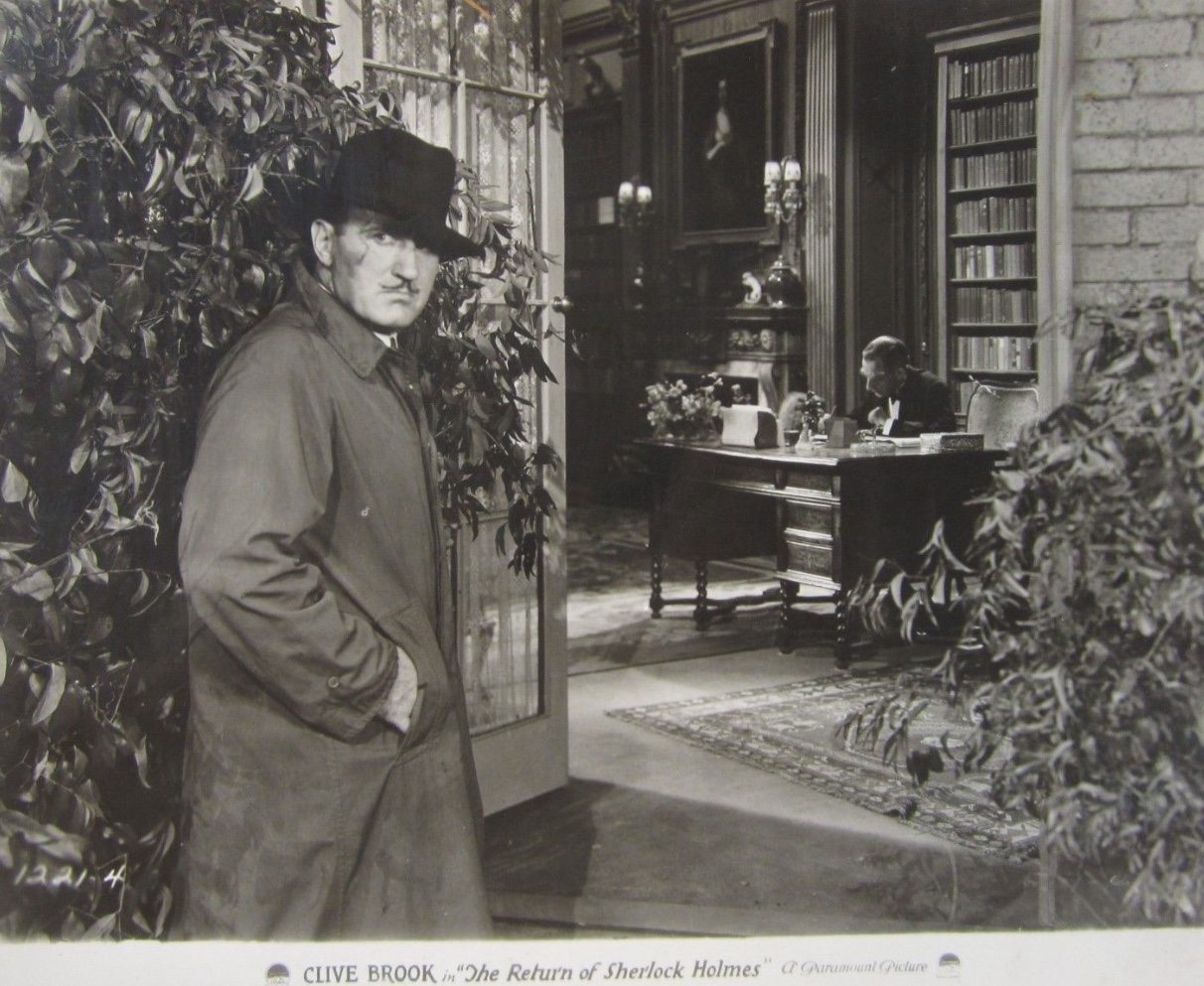
The Return of Sherlock Holmes (1929): The Detective Speaks
The 1929 film The Return of Sherlock Holmes holds a significant place in the history of Sherlock Holmes adaptations, as it was one of the first sound films to feature the iconic detective. This transition from silent to sound cinema marked a new era for Sherlock Holmes on screen, allowing audiences to hear the detective’s voice for the first time and adding a new dimension to his character.
Production and Context
Produced by Paramount Pictures, The Return of Sherlock Holmes was part of the wave of early sound films that followed the success of The Jazz Singer (1927). The film was directed by Basil Dean and starred Clive Brook as Sherlock Holmes, H. Reeves-Smith as Dr. John Watson, and Betty Lawford as Alice Faulkner.
The film was not a direct adaptation of any single Arthur Conan Doyle story, but rather a pastiche that drew elements from several stories, including “The Adventure of the Empty House” (which details Holmes’ return from the dead) and “A Scandal in Bohemia” (which introduces Irene Adler). This approach was common in early Sherlock Holmes films, which often combined elements from multiple stories to create a single narrative.
Plot Analysis
The film begins with Sherlock Holmes (Clive Brook) returning to London after a three-year absence following his apparent death at the Reichenbach Falls. He is greeted by his old friend Dr. John Watson (H. Reeves-Smith), who has been carrying on his medical practice in Holmes’ absence.
Holmes’ return is prompted by a new case involving Alice Faulkner (Betty Lawford), a young woman who is being pursued by a gang of criminals led by Professor Moriarty (Harry T. Morey). Faulkner possesses a set of compromising letters that Moriarty is desperate to obtain, and she turns to Holmes for protection.
As Holmes and Watson investigate the case, they navigate a web of intrigue that involves secret codes, hidden compartments, and dangerous confrontations. The tension builds to a climactic showdown with Moriarty, where Holmes must use all of his deductive skills and physical prowess to defeat his nemesis and protect Faulkner.
Character Interpretations
“The Return of Sherlock Holmes” offers interesting interpretations of the classic characters, particularly in the context of early sound cinema:
Sherlock Holmes (Clive Brook)
Clive Brook’s portrayal of Sherlock Holmes was one of the first to be heard on screen, marking a significant moment in the character’s cinematic history. Brook had previously played Holmes in two silent films, Sherlock Holmes (1922) and The Adventures of Sherlock Holmes (1925), and his transition to sound was eagerly anticipated by audiences.
Key character traits include:
- His distinctive voice, which added a new dimension to the character
- His calm, authoritative demeanor, which contrasted with the more eccentric portrayals that would follow
- His physical agility, which was emphasized in the action sequences
- His deductive abilities, which were showcased through both visual and verbal means
- His dry wit and occasional sarcasm, which translated well to the sound medium
Brook’s Holmes was a more restrained and dignified character than some later interpretations, reflecting the sensibilities of early sound cinema.
Dr. John Watson (H. Reeves-Smith)
H. Reeves-Smith’s portrayal of Watson was typical of the era, presenting the character as a loyal but somewhat bumbling companion to Holmes.
Key character traits include:
- His loyalty and devotion to Holmes
- His occasional confusion at Holmes’ deductive methods
- His bravery in the face of danger
- His role as the audience surrogate, asking the questions viewers would ask
- His dry sense of humor, which provided comic relief
While not as fully realized as later portrayals, Reeves-Smith’s Watson effectively served his purpose as Holmes’ companion and foil.
Alice Faulkner (Betty Lawford)
Betty Lawford’s portrayal of Alice Faulkner, a character loosely based on Irene Adler, added a romantic element to the story that was typical of early sound films.
Key character traits include:
- Her beauty and charm, which captivate both Holmes and the audience
- Her vulnerability, which makes her plight sympathetic
- Her intelligence and resourcefulness, which allow her to assist Holmes in his investigation
- Her bravery, which is demonstrated in her willingness to stand up to Moriarty
Lawford’s Faulkner was a typical leading lady of the era, combining beauty with a certain amount of pluck and intelligence.
Thematic Elements
“The Return of Sherlock Holmes” explores several themes that are central to the Sherlock Holmes mythos:
The Power of Deduction
The film emphasizes Holmes’ deductive abilities, showcasing how he uses his powers of observation and reasoning to solve the case. This theme was particularly important in the transition to sound cinema, as it allowed audiences to hear Holmes explain his reasoning process in detail.
Loyalty and Friendship
The film celebrates the enduring friendship between Holmes and Watson, showing how Watson remains loyal to Holmes even after his apparent death and how Holmes returns to London to help a friend in need.
Good vs. Evil
The film presents a clear moral dichotomy between Holmes’ dedication to justice and Moriarty’s pursuit of power. This theme was particularly resonant in the late 1920s, as the world was still recovering from World War I and facing economic uncertainty.
The Importance of Truth
The film emphasizes the importance of truth and honesty, as Holmes works to protect Faulkner and ensure that the compromising letters do not fall into the wrong hands.
Technical Innovations
“The Return of Sherlock Holmes” was notable for several technical innovations that reflected the transition to sound cinema:
- Sound Design: The film was one of the first to use synchronized sound to enhance the storytelling, including dialogue, sound effects, and music
- Camera Work: The film employed static camera setups that were typical of early sound films, as the microphones of the era were not easily movable
- Editing: The film used a more straightforward editing style than silent films, which relied more heavily on visual storytelling
- Production Design: The film featured elaborate sets that recreated Victorian London in detail
- Acting Style: The acting style was more restrained than in silent films, as the addition of sound allowed for more subtle performances
Legacy and Impact
“The Return of Sherlock Holmes” holds a significant place in the history of Sherlock Holmes adaptations:
- Sound Innovation: It was one of the first sound films to feature Sherlock Holmes, marking a new era for the character on screen
- Clive Brook’s Portrayal: Clive Brook’s portrayal of Holmes was influential, establishing many of the conventions that would define the character in sound films
- Narrative Structure: The film’s narrative structure, which combined elements from multiple Conan Doyle stories, established a pattern that would be followed by many subsequent Sherlock Holmes films
- Technical Transition: The film represents an important moment in the transition from silent to sound cinema, demonstrating how classic literary characters could be adapted to the new medium
- Historical Significance: The film is a valuable historical document, providing insight into the state of cinema during the early sound era
Conclusion
“The Return of Sherlock Holmes” is a significant film in the history of Sherlock Holmes adaptations, marking the character’s transition from silent to sound cinema. While it may seem dated by modern standards, it represents an important moment in the evolution of both Sherlock Holmes on screen and cinema itself.
The film’s greatest strength is its historical significance, as it was one of the first opportunities for audiences to hear Sherlock Holmes speak. Clive Brook’s portrayal of Holmes, while more restrained than later interpretations, effectively captured the character’s essence and established many of the conventions that would define Holmes in sound films.
“The Return of Sherlock Holmes” proves that the Sherlock Holmes mythos is flexible enough to adapt to new mediums and technologies, while still retaining the core elements that make these stories enduring. As one of the first sound adaptations of Sherlock Holmes, it paved the way for the many adaptations that would follow, demonstrating that the character’s appeal transcends time and technological change.
Image Suggestion
- Image location:
/static/images/ - Image name:
sherlock-holmes-return-1929.jpg - Suggested content: A promotional still of Clive Brook as Sherlock Holmes and H. Reeves-Smith as Dr. John Watson standing in a Victorian-era room, with Holmes holding a pipe and Watson looking on