Sherlock Holmes: The Evolution of a Detective Icon
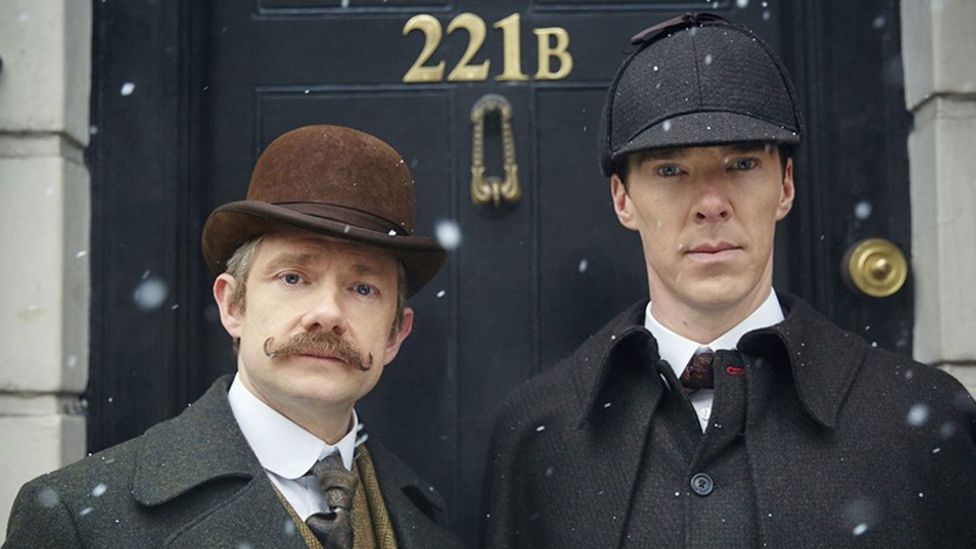
Sherlock Holmes: The Evolution of a Detective Icon
Sherlock Holmes stands as one of the most enduring and iconic characters in literary and cultural history. Since his creation by Arthur Conan Doyle in 1887, Holmes has evolved from a popular fictional detective to a global cultural icon whose influence extends far beyond the pages of the original stories. This evolution reflects not only changes in literary and media landscapes but also shifting cultural values and societal concerns.
The Original: Arthur Conan Doyle’s Sherlock Holmes
Arthur Conan Doyle introduced Sherlock Holmes in A Study in Scarlet (1887), a novel that established the character’s core traits and set the template for detective fiction.
Core Traits:
- Deductive Reasoning: Holmes’ exceptional ability to observe details and draw logical conclusions became his defining characteristic
- Eccentricity: His peculiar habits, including violin playing, chemical experiments, and erratic work patterns
- Intellectual Superiority: His confidence bordering on arrogance, stemming from his remarkable abilities
- Emotional Detachment: His apparent indifference to emotions, viewing them as distractions from pure reason
- Moral Ambiguity: His willingness to bend or break the law in pursuit of what he considered true justice
Context:
Conan Doyle’s Holmes emerged during the Victorian era, a time of scientific advancement and growing faith in rationality. The character embodied the era’s belief in the power of reason to solve problems and uncover truth.
The Golden Age: Film and Radio Adaptations (1930s-1950s)
The advent of film and radio brought Sherlock Holmes to a wider audience, with adaptations that both忠实 to the original character and introduced new elements.
Key Portrayals:
- Basil Rathbone (1939-1946): Rathbone’s Holmes became the definitive interpretation for a generation, blending intellectual brilliance with a more polished, sophisticated demeanor
- Nigel Bruce (as Watson): Bruce’s bumbling Watson provided comic relief and highlighted Holmes’ superior intellect
Evolution:
- Holmes became more action-oriented, reflecting the demands of visual media
- His deductive methods were simplified for broader audiences
- Later adaptations shifted to contemporary settings during World War II, positioning Holmes as a patriotic figure
The Television Era: Faithful Adaptations (1960s-1990s)
Television allowed for more detailed and faithful adaptations of the original stories, with a focus on capturing the nuances of Conan Doyle’s character.
Key Portrayals:
- Jeremy Brett (1984-1994): Brett’s portrayal is widely regarded as the most faithful to Conan Doyle’s original vision, capturing Holmes’ intensity, eccentricity, and occasional vulnerability
- David Burke/Edward Hardwicke (as Watson): More competent and intelligent than previous portrayals, closer to the character in the stories
Evolution:
- Greater emphasis on Holmes’ emotional complexity and inner turmoil
- More faithful reproduction of the Victorian setting and social context
- Exploration of Holmes’ methods in greater detail
The Modern Era: Reimagining the Detective (2000s-Present)
Contemporary adaptations have reimagined Sherlock Holmes for modern audiences, while retaining the core elements that make him enduring.
Key Portrayals:
- Robert Downey Jr. (2009-2011): A more physical, action-oriented Holmes with a roguish charm
- Benedict Cumberbatch (2010-2017): A modernized Holmes for the digital age, with exceptional intellect but limited social skills
- Jonny Lee Miller (2012-2019): A recovering addict whose struggle with sobriety adds depth to his character
Evolution:
- Greater focus on Holmes’ flaws and vulnerabilities
- Exploration of his emotional life and capacity for relationships
- Adaptation to contemporary settings and technologies
- More diverse interpretations reflecting modern sensibilities
The Cultural Impact
Sherlock Holmes’ evolution as a cultural icon is reflected in his influence on various aspects of popular culture:
Detective Fiction:
- Holmes established the template for the modern detective character
- His methods of deductive reasoning became a staple of the genre
- The Holmes-Watson dynamic set the standard for detective-partner relationships
Language and Idiom:
- Phrases like “elementary, my dear Watson” (though never actually spoken in the original stories) entered common usage
- Terms like “Sherlockian” and “Holmesian” are used to describe fans and scholars of the character
- The concept of “deductive reasoning” is often associated with Holmes
Philosophy and Psychology:
- Holmes’ emphasis on reason and logic has influenced philosophical discourse
- His character has been analyzed through various psychological lenses, including autism spectrum disorders
- His methods have been applied to fields ranging from criminal justice to business strategy
Fan Culture:
- Sherlock Holmes has one of the oldest and most dedicated fan bases in literary history
- Fan clubs and societies exist worldwide, dedicated to studying and celebrating the character
- Fan fiction and alternative interpretations have expanded the Holmes universe beyond the original stories
The Enduring Appeal
Several factors contribute to Sherlock Holmes’ enduring appeal across generations:
Intellectual Fascination:
- Audiences are captivated by Holmes’ deductive abilities and the intellectual challenge of following his reasoning
- The puzzles and mysteries he solves provide mental stimulation
Psychological Complexity:
- Holmes’ eccentricities and contradictions make him a compelling and relatable character
- His struggle to balance his intellectual gifts with his emotional needs resonates with audiences
Universal Themes:
- The stories explore universal themes of justice, morality, and the human condition
- Holmes’ unwavering commitment to truth and justice transcends time and culture
Adaptability:
- The character’s core traits are flexible enough to be reimagined in different times and settings
- Each generation can find new meaning and relevance in the stories
Conclusion
Sherlock Holmes’ evolution from a popular fictional detective to a global cultural icon is a testament to the power of Arthur Conan Doyle’s creation and the character’s remarkable adaptability. From the Victorian era to the digital age, Holmes has remained a symbol of intellectual brilliance, rational inquiry, and unwavering commitment to justice.
What makes Holmes truly enduring is not just his deductive abilities or eccentricities, but his humanity. Beneath the cool exterior of the master detective lies a complex, flawed individual whose struggles and triumphs resonate with audiences across time and cultures. As long as there is a desire for stories of mystery, intellect, and human connection, Sherlock Holmes will continue to captivate and inspire.
Image Suggestion
- Image location:
/static/images/ - Image name:
sherlock-holmes-icon-evolution.jpg - Suggested content: A collage featuring different actors who have portrayed Sherlock Holmes over the years, including Basil Rathbone, Jeremy Brett, Robert Downey Jr., and Benedict Cumberbatch, with Arthur Conan Doyle’s original illustrations in the background