Sherlock Holmes: Case of Evil (2002) TV Film Analysis
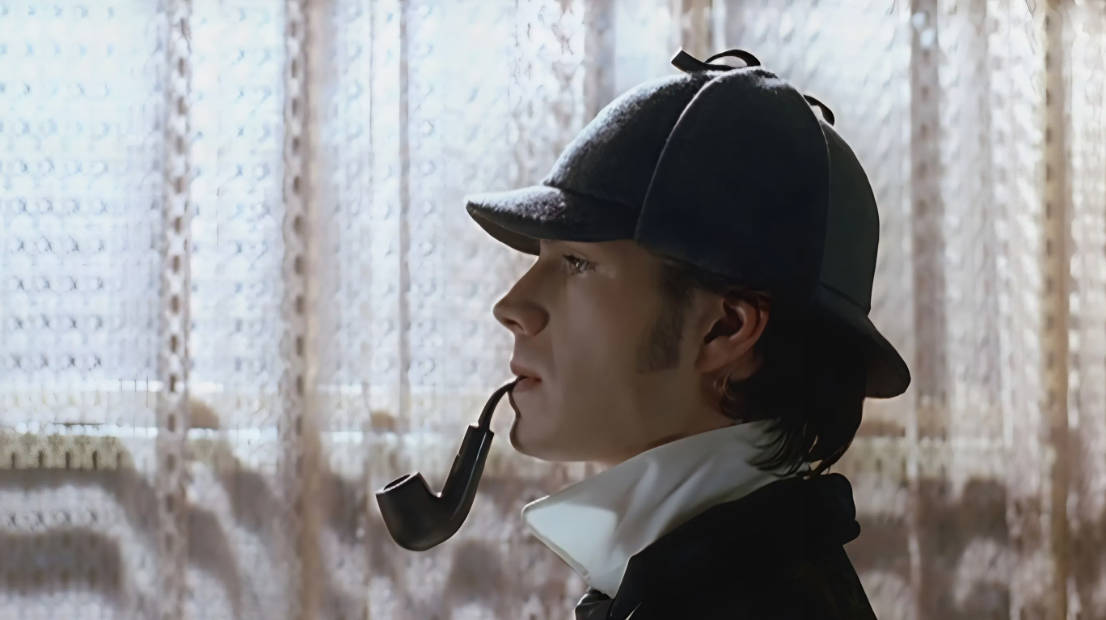
Sherlock Holmes: Case of Evil (2002): The Dark Origin
The 2002 TV film Sherlock Holmes: Case of Evil offers a distinctive and darker interpretation of the Sherlock Holmes mythos, focusing on the detective’s early career and his first encounter with Professor Moriarty. This film takes significant liberties with Arthur Conan Doyle’s original stories, but it offers a compelling exploration of Holmes’ formative years and the origins of his rivalry with his greatest nemesis.
Production and Context
Produced for TNT Network, Case of Evil was part of a wave of Sherlock Holmes adaptations that sought to reimagine the character for contemporary audiences. Unlike many adaptations that focus on Holmes at the height of his career, this film explores his early years, when he was still developing his methods and his persona.
The film was directed by Graham Theakston and starred James D’Arcy as Sherlock Holmes, Roger Morlidge as Dr. John Watson, and Vincent D’Onofrio as Professor Moriarty. While not a critical or commercial blockbuster, it has gained a cult following for its unique approach to the Sherlock Holmes mythos.
Plot Analysis
The film is set in 1880s London, before Holmes and Watson have established their partnership at 221B Baker Street. Sherlock Holmes (James D’Arcy) is a young, ambitious detective who has already gained a reputation for his deductive abilities, but who is still finding his footing as a professional investigator.
The story begins with Holmes investigating the murder of a young woman, which leads him to uncover a larger conspiracy involving drug trafficking and prostitution. As he delves deeper into the case, he crosses paths with Professor Moriarty (Vincent D’Onofrio), a brilliant but ruthless criminal mastermind who controls much of London’s underworld.
Holmes is joined in his investigation by Dr. John Watson (Roger Morlidge), a former army surgeon who is struggling to establish his practice in London. Together, they navigate the seedy underbelly of Victorian London, encountering a variety of colorful characters and dangerous situations.
The tension builds to a climactic confrontation between Holmes and Moriarty, where Holmes must use all of his wits and courage to survive and bring Moriarty to justice.
Character Interpretations
“Case of Evil” offers unique interpretations of the classic Sherlock Holmes characters, particularly in their younger incarnations:
Sherlock Holmes (James D’Arcy)
James D’Arcy’s portrayal of Holmes is significantly different from traditional interpretations, presenting a younger, more volatile version of the character.
Key character traits include:
- His youth and inexperience, which occasionally lead to mistakes
- His intense, almost obsessive approach to investigation
- His fondness for alcohol and women, which contrasts with the more asexual portrayal in many adaptations
- His growing awareness of his own limitations and the need for a partner
- His developing moral code, which is tested by the brutality of Moriarty’s crimes
D’Arcy’s Holmes is a man still finding his identity, not yet the polished detective of later years. This portrayal adds depth and vulnerability to the character, making his eventual transformation into the iconic detective more compelling.
Dr. John Watson (Roger Morlidge)
Roger Morlidge’s portrayal of Watson is also distinctive, presenting a younger, more independent version of the character than is typically seen.
Key character traits include:
- His struggle to establish his medical practice in London
- His initial skepticism about Holmes’ methods and reputation
- His growing respect for Holmes as they work together
- His bravery and practicality, which complement Holmes’ more cerebral approach
- His willingness to take risks to help Holmes solve the case
Morlidge’s Watson is more than just a sidekick; he is a fully realized character with his own goals and motivations, making his eventual partnership with Holmes more meaningful.
Professor Moriarty (Vincent D’Onofrio)
Vincent D’Onofrio’s portrayal of Moriarty is one of the film’s standout elements, presenting a more visceral and menacing version of the character than is typically seen.
Key character traits include:
- His physical presence and imposing stature
- His intelligence and strategic thinking
- His brutality and willingness to use violence
- His charismatic yet terrifying personality
- His personal interest in Holmes, seeing him as a worthy opponent
D’Onofrio’s Moriarty is a formidable antagonist, whose physical threat matches his intellectual prowess, making him a more dangerous and compelling villain than in many adaptations.
Thematic Exploration
“Case of Evil” explores several themes that are particularly relevant to Holmes’ early career:
Identity and Self-Discovery
The film examines Holmes’ journey of self-discovery as he develops his identity as a detective and establishes his methods. This theme is particularly compelling because it shows the character before he has become the iconic figure we know from the later stories.
The Cost of Justice
The film explores the personal cost of pursuing justice, as Holmes becomes increasingly obsessed with bringing Moriarty to justice, even at the expense of his own well-being and relationships.
The Nature of Evil
The film delves into the nature of evil through its portrayal of Moriarty, suggesting that evil is not just a abstract concept but a very real force in the world. This theme is reinforced by the film’s depiction of the seedy underbelly of Victorian London.
The Power of Partnership
The film emphasizes the importance of partnership, as Holmes comes to realize that he is more effective when working with Watson than when working alone. This theme lays the foundation for the iconic partnership that will define both characters in later stories.
Visual Style and Cinematic Techniques
“Case of Evil” employs a distinctive visual style that contributes to its darker tone:
- Atmospheric Lighting: The film uses dim, moody lighting to create a sense of tension and foreboding, particularly in the scenes set in London’s underworld
- Gritty Realism: The film presents a more gritty and realistic portrayal of Victorian London than many adaptations, emphasizing the poverty, crime, and corruption of the era
- Dynamic Camera Work: The film employs handheld camera work and quick cuts to create a sense of energy and urgency, particularly in the action sequences
- Period Detail: Despite its darker tone, the film maintains a commitment to period detail, with authentic costumes and sets that evoke the Victorian era
- Music: The film’s score, composed by Barrington Pheloung, combines traditional orchestral elements with more contemporary sounds, reflecting the film’s blend of classic and modern sensibilities
Critical Reception and Legacy
“Case of Evil” received mixed reviews from critics, with some praising its unique approach to the Sherlock Holmes mythos and others criticizing its departures from the original stories. However, the film has gained a cult following over the years, particularly among fans who appreciate its darker, more visceral interpretation of the character.
The film’s legacy includes:
- Its exploration of Holmes’ early career, which paved the way for other adaptations that focus on the character’s formative years
- Its distinctive portrayal of Moriarty as a physically imposing as well as intellectually formidable villain
- Its gritty, realistic portrayal of Victorian London, which influenced later adaptations
- Its emphasis on the emotional and psychological aspects of Holmes’ character, which added depth to the portrayal of the detective
Conclusion
“Sherlock Holmes: Case of Evil” offers a bold and distinctive interpretation of the Sherlock Holmes mythos, focusing on the detective’s early career and his first encounter with Professor Moriarty. While it takes significant liberties with Arthur Conan Doyle’s original stories, it offers a compelling exploration of Holmes’ formative years and the origins of his rivalry with his greatest nemesis.
The film’s greatest strength is its characterizations, particularly James D’Arcy’s portrayal of a young, still developing Holmes and Vincent D’Onofrio’s menacing portrayal of Moriarty. These performances, combined with the film’s gritty visual style and engaging storyline, make “Case of Evil” a memorable and worthwhile addition to the Sherlock Holmes adaptation landscape.
“Case of Evil” proves that the Sherlock Holmes mythos is flexible enough to accommodate different interpretations, even those that take significant departures from the original stories. By focusing on Holmes’ early years, the film adds depth and context to the character, making his eventual transformation into the iconic detective more meaningful and compelling.
Image Suggestion
- Image location:
/static/images/ - Image name:
sherlock-holmes-case-of-evil-2002.jpg - Suggested content: A promotional still of James D’Arcy as Sherlock Holmes and Vincent D’Onofrio as Professor Moriarty facing off in a tense confrontation, with the dark, atmospheric streets of Victorian London in the background