Sherlock Holmes Adaptations: Evolution on Screen
Sherlock Holmes Adaptations: Evolution on Screen
The evolution of Sherlock Holmes adaptations on screen is a fascinating journey through the history of cinema and television, reflecting changing cultural tastes, technological advancements, and artistic sensibilities. From silent films to modern interpretations, the character of Sherlock Holmes has been reimagined countless times, yet his core essence has remained remarkably consistent.
The Silent Era (1900s-1920s)
The first Sherlock Holmes films were silent shorts produced in the early 1900s. These films, often only a few minutes long, were limited by the technology of the era but still managed to capture the essence of the character.
Key Adaptations:
- Sherlock Holmes Baffled (1900): A 30-second short film considered the first Sherlock Holmes adaptation
- The Adventures of Sherlock Holmes (1916): Starring William Gillette, who had previously played Holmes on stage
- Sherlock Holmes (1922): Starring John Barrymore in a feature-length adaptation
Characteristics:
- Visual storytelling was paramount, as dialogue could only be conveyed through intertitles
- Holmes was often portrayed as a more action-oriented character than in the stories
- Adaptations frequently combined elements from multiple Conan Doyle stories
- The Victorian setting was generally preserved, though with some artistic license
The Golden Age (1930s-1940s)
The introduction of sound cinema in the late 1920s revolutionized Sherlock Holmes adaptations, allowing audiences to hear the detective’s voice for the first time. This era saw the rise of the iconic Basil Rathbone/Nigel Bruce films, which set the standard for Sherlock Holmes adaptations for decades to come.
Key Adaptations:
- The Hound of the Baskervilles (1939): The first sound adaptation of the novel, starring Basil Rathbone
- Sherlock Holmes and the Voice of Terror (1942): The first of the wartime adaptations set in contemporary England
- Sherlock Holmes Faces Death (1943): Part of the Universal Pictures series starring Rathbone and Bruce
Characteristics:
- Basil Rathbone’s portrayal became the definitive interpretation of Holmes for a generation
- Nigel Bruce’s Watson was more bumbling than in the stories, providing comic relief
- Later films were updated to contemporary settings, reflecting wartime concerns
- Production values improved significantly with the advent of sound and color
The Television Era (1950s-1980s)
Television brought Sherlock Holmes to a wider audience than ever before, with adaptations ranging from anthology series to full-length television movies.
Key Adaptations:
- Sherlock Holmes (1954-1955): A syndicated television series starring Ronald Howard
- The Hound of the Baskervilles (1959): A Hammer Horror adaptation starring Peter Cushing
- The Adventures of Sherlock Holmes (1984-1994): The definitive Granada Television series starring Jeremy Brett
Characteristics:
- The Granada series set a new standard for faithfulness to the original stories
- Jeremy Brett’s portrayal is widely regarded as the most faithful to Conan Doyle’s vision
- Television allowed for longer, more detailed adaptations of the stories
- The Victorian setting was generally preserved, with increased attention to historical accuracy
The Modern Era (1990s-Present)
The modern era has seen a proliferation of Sherlock Holmes adaptations, ranging from traditional period pieces to radical reimaginings set in contemporary times.
Key Adaptations:
- Sherlock Holmes (2009) and Sherlock Holmes: A Game of Shadows (2011): Guy Ritchie’s action-oriented films starring Robert Downey Jr.
- Sherlock (2010-2017): The BBC’s modern adaptation starring Benedict Cumberbatch
- Elementary (2012-2019): CBS’s modern adaptation set in New York, starring Jonny Lee Miller and Lucy Liu
- Enola Holmes (2020): Netflix’s film focusing on Holmes’ younger sister, starring Millie Bobby Brown
Characteristics:
- Increased diversity in casting and storytelling approaches
- Greater emphasis on character development and emotional depth
- Exploration of Holmes’ flaws and vulnerabilities
- Blending of traditional elements with contemporary sensibilities
- More focus on the relationship between Holmes and Watson as a partnership of equals
Thematic Evolution
The themes explored in Sherlock Holmes adaptations have evolved over time, reflecting changing cultural concerns:
Classic Themes (1900s-1940s):
- The triumph of reason over superstition
- The importance of justice and morality
- The value of friendship and loyalty
- The fascination with scientific detection
Expanded Themes (1950s-1980s):
- The complexities of the Holmes-Watson relationship
- The impact of Holmes’ eccentricity on those around him
- The social and historical context of Victorian England
- The psychological aspects of detection
Modern Themes (1990s-Present):
- The burden of genius and its impact on personal relationships
- The fluidity of identity and gender roles
- The tension between traditional methods and modern technology
- The importance of emotional intelligence alongside deductive reasoning
- The exploration of Holmes’ backstory and personal life
Technological Evolution
Technological advancements have had a profound impact on how Sherlock Holmes adaptations are produced and consumed:
Silent to Sound (1920s-1930s):
- Allowed audiences to hear Holmes’ voice for the first time
- Enabled more nuanced performances and dialogue
- Changed the way deductions were presented on screen
Black and White to Color (1940s-1960s):
- Enhanced the visual representation of Victorian London
- Allowed for more detailed production design
- Added a new dimension to costume design and setting
Analog to Digital (1990s-Present):
- Enabled more sophisticated special effects and cinematography
- Facilitated the creation of more realistic period settings
- Allowed for innovative visual representations of Holmes’ thought process
- Changed the way audiences consume and engage with adaptations
The Enduring Appeal
Despite the many changes in Sherlock Holmes adaptations over the years, certain elements have remained consistent, contributing to the character’s enduring appeal:
Core Elements:
- Holmes’ exceptional deductive abilities and keen powers of observation
- His eccentric personality and distinctive mannerisms
- His complex relationship with Dr. Watson
- His unwavering commitment to justice
- The intellectual pleasure of following his deductions
Adaptability:
- The Sherlock Holmes stories provide a flexible framework that can be adapted to different times and settings
- The character’s essential traits are universal and timeless
- The stories combine intellectual challenge with emotional engagement
- The Holmes-Watson relationship is endlessly fascinating and adaptable
Conclusion
The evolution of Sherlock Holmes adaptations on screen reflects both the changing nature of cinema and television and the enduring appeal of Arthur Conan Doyle’s creation. From silent shorts to modern blockbusters, Sherlock Holmes has remained a fixture of popular culture, captivating audiences with his brilliance, eccentricity, and unwavering commitment to justice.
Each era has brought its own interpretation of the character, from Basil Rathbone’s definitive portrayal in the Golden Age to Benedict Cumberbatch’s modern reimagining. Yet through all these changes, the core essence of Sherlock Holmes has remained remarkably consistent, a testament to the strength of Conan Doyle’s original creation.
As technology continues to evolve and cultural tastes continue to change, it is certain that Sherlock Holmes will continue to be reimagined in new and innovative ways. But no matter how he is portrayed, the character’s essential qualities—his brilliance, his eccentricity, his commitment to justice—will continue to captivate audiences for generations to come.
Image Suggestion
- Image location:
/static/images/ - Image name:
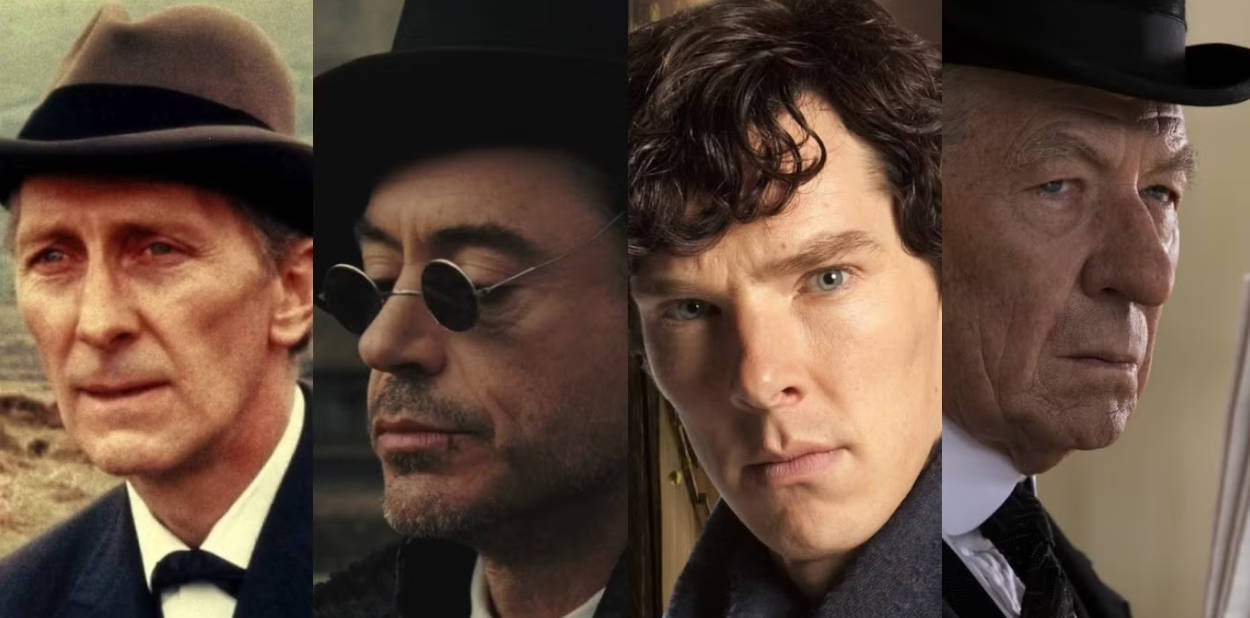
sherlock-holmes-adaptations-evolution.jpg - Suggested content: A collage featuring different actors who have portrayed Sherlock Holmes over the years, including Basil Rathbone, Jeremy Brett, Robert Downey Jr., and Benedict Cumberbatch